// SPECIES PROFILE · CROP · INTRODUCED · TENDER ANNUAL HERB
Basil
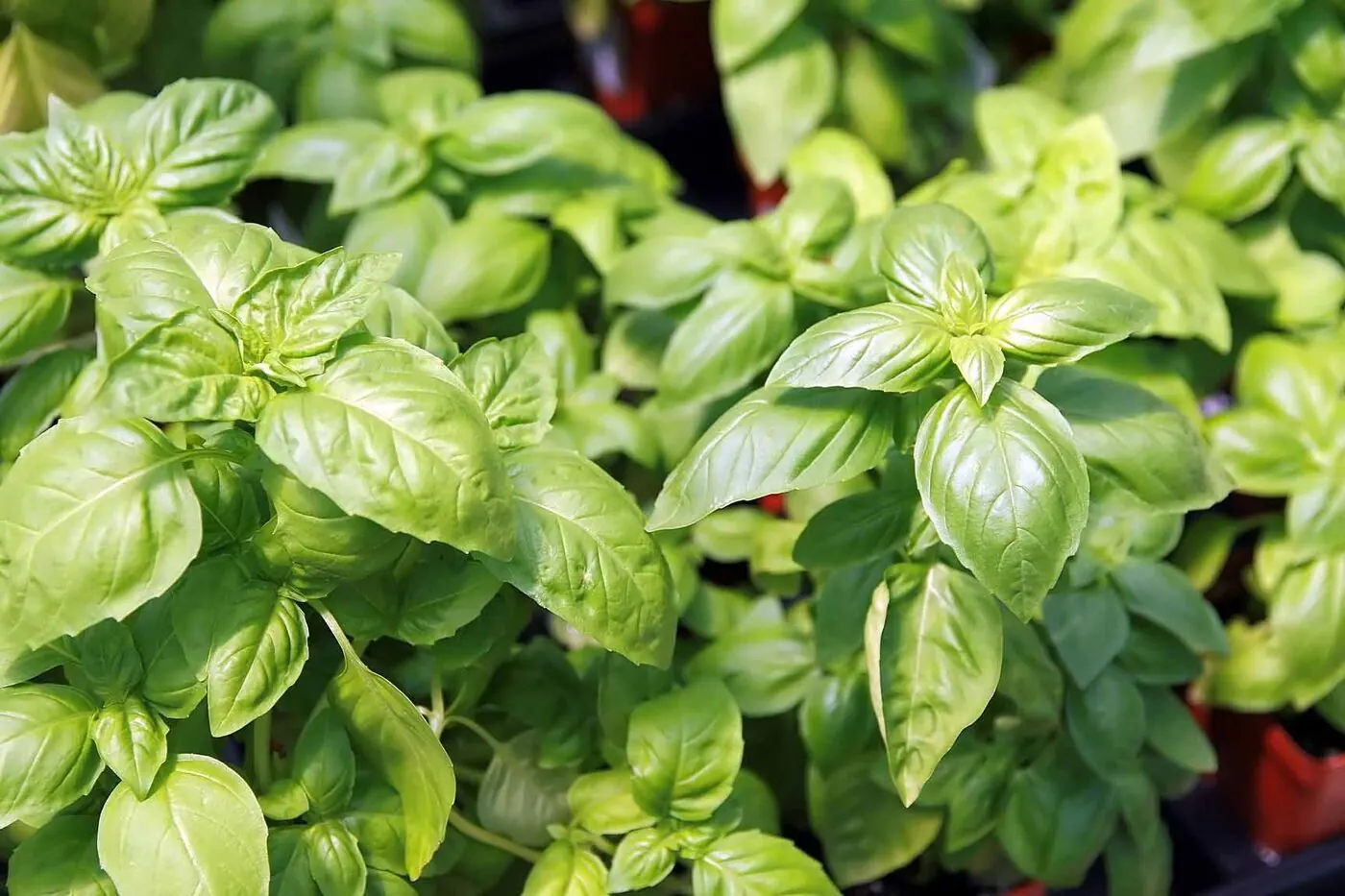
The classic warm-season culinary herb of Mediterranean, Southeast-Asian, and South-Asian cuisines — an aromatic, frost-tender annual mint-family plant that thrives in NE Oklahoma's long, hot summers, succession-sows from May through July, and rewards a small bed with months of pesto, salads, curry, and herbal tea. Basil is not a North American native — it almost certainly originated in tropical Africa and India and has been a cultivated kitchen plant for at least 4,000 years — but in the NE Oklahoma vegetable garden it occupies a permanent place beside the tomatoes, the peppers, and the squash.
- Family
- Lamiaceae (mint family)
- Group
- Tender annual culinary herb
- Native range
- Tropical Africa & SE Asia (India centre of cultivated diversity); pantropical and warm-temperate as a crop
- Native to NE OK?
- No — cultivated kitchen-garden crop
- USDA hardiness
- Annual everywhere with a frost; perennial in zones 10–11
- Mature size
- 12–30 in tall × 12–18 in wide; varies by cultivar
- Sun
- Full sun — 6+ hrs ideal
- Soil
- Loose, fertile, well-drained, pH 6.0–7.5
- Water
- Even moisture — about 1 in/wk; never waterlogged
- Sow
- Indoors 4–6 wks before last frost · transplant after soil reaches 60°F (mid-late April Tulsa); direct-sow May–July
- Days to harvest
- ~60–75 days from seed; pinch first flowers around 6–8 weeks
- Companion folklore
- Long associated with tomatoes, peppers; evidence is mostly anecdotal
- Pollinators
- Honey bees, small native bees, and hoverflies love the flower spikes
- Frost
- Killed by first hard frost — usually late October Tulsa
- Ecological role
- Heat-loving culinary annual · pollinator-friendly when flowering